Certificates play an important role in proving skills, qualifications, and professional achievements. However, as more certificates are issued and shared online, the risk of fake certificates and digital certificate fraud has increased. A forged certificate can damage an organisation’s reputation, reduce trust in legitimate qualifications, and make it difficult for employers or institutions to verify genuine achievements.
To prevent certificate forgery, organisations need more than traditional document designs or security features. Modern certificate protection requires reliable verification methods that allow credentials to be checked quickly and accurately. By using secure digital verification systems, unique certificate identifiers, and controlled certificate records, organisations can reduce the risk of fake online certificates and stop unauthorised certificates from being created or misused.
What Is Certificate Forgery and How Does Certificate Fraud Happen?
Certificate forgery is the process of creating, changing, or using a certificate that is not genuinely issued by an authorised organisation. It involves manipulating official documents or digital records to falsely represent someone’s qualifications, skills, training, or achievements.
A fake certificate may look similar to a genuine document, but it does not represent a legitimate qualification or achievement. Fraudsters often create these certificates to mislead employers, training providers, educational institutions, or other organisations that rely on verified credentials.
Certificate fraud can happen in several ways, including:
- Fake training certificates: Fraudsters may create certificates claiming that an individual has completed a course or professional training when no such achievement exists.
- Counterfeit qualifications: Fake academic or professional qualifications may be produced to create false evidence of education, skills, or experience.
- Modified digital certificates: Existing digital certificates can be edited by changing names, dates, grades, certificate numbers, or other important details.
Document fraud is not limited to creating completely fake certificates. It can also involve altering genuine documents after they have been issued. For example, someone may edit a certificate template, replace personal details, or change achievement information to make the document appear more valuable or authentic.
With the growth of online certificate sharing, fraudsters can also misuse digital files by copying designs, removing security features, or creating unauthorised versions that are difficult to identify without proper verification. This is why organisations increasingly need reliable verification processes to confirm whether a certificate is genuine.
Why Are Fake Certificates a Growing Problem Online?
The increasing use of online learning, digital training platforms, and remote recruitment processes has made certificates easier to issue, share, and verify. However, this digital shift has also created new opportunities for fraudsters to create and distribute a fake online certificate that appears legitimate.
The growing importance of qualifications in employment and professional development has also increased the need for reliable verification. In the UK, qualification fraud is recognised as a serious issue because fake or misleading credentials can affect trust in education, employment, and professional standards.
Unlike traditional paper certificates, digital certificates can be copied, edited, and shared instantly across the internet. Without proper verification systems, it can become difficult for organisations to determine whether a certificate is genuine or has been altered. A simple image or PDF file can be modified by changing names, dates, qualification details, or certificate numbers, allowing a fake certificate to appear authentic.
The impact of certificate fraud affects several groups:
Employers
Employers often use certificates to confirm that candidates have the required skills, qualifications, or training. Accepting a fraudulent certificate can result in hiring individuals who do not have the claimed knowledge or experience, creating potential safety, compliance, and performance risks.
Training Providers
Training providers invest time and resources into delivering recognised education and issuing legitimate certificates. When fake certificates are created using their name or branding, it can damage their reputation and reduce trust among learners and business partners.
Educational Organisations
Schools, colleges, and professional institutions depend on trusted credentials to maintain the value of their qualifications. Certificate fraud can weaken confidence in their programmes and make verification processes more complicated.
Certificate Issuers
Organisations responsible for issuing certificates need to protect their credentials from misuse. Without secure verification methods, unauthorised individuals may create copies or modified versions that appear to come from the original issuer.
As digital certificates continue to become more common, organisations need stronger methods to verify authenticity. Secure online verification systems, unique certificate identifiers, and controlled digital records help prevent misuse and ensure that genuine achievements remain trusted.
How to Prevent Certificate Forgery and Stop Fake Certificates Online
Organisations that issue certificates need reliable ways to protect their credentials and maintain trust in their qualifications. Learning how to prevent certificate forgery requires a combination of secure certificate management, verification processes, and technology that makes unauthorised changes easier to detect.
For organisations looking at how to stop fake certificate online fraud, the focus should not only be on making certificates look secure but also on creating a system where anyone can confirm whether a certificate is genuine. Effective certificate fraud prevention methods help protect the reputation of certificate issuers while making verification faster and more reliable.
Use Unique Certificate Identification Numbers
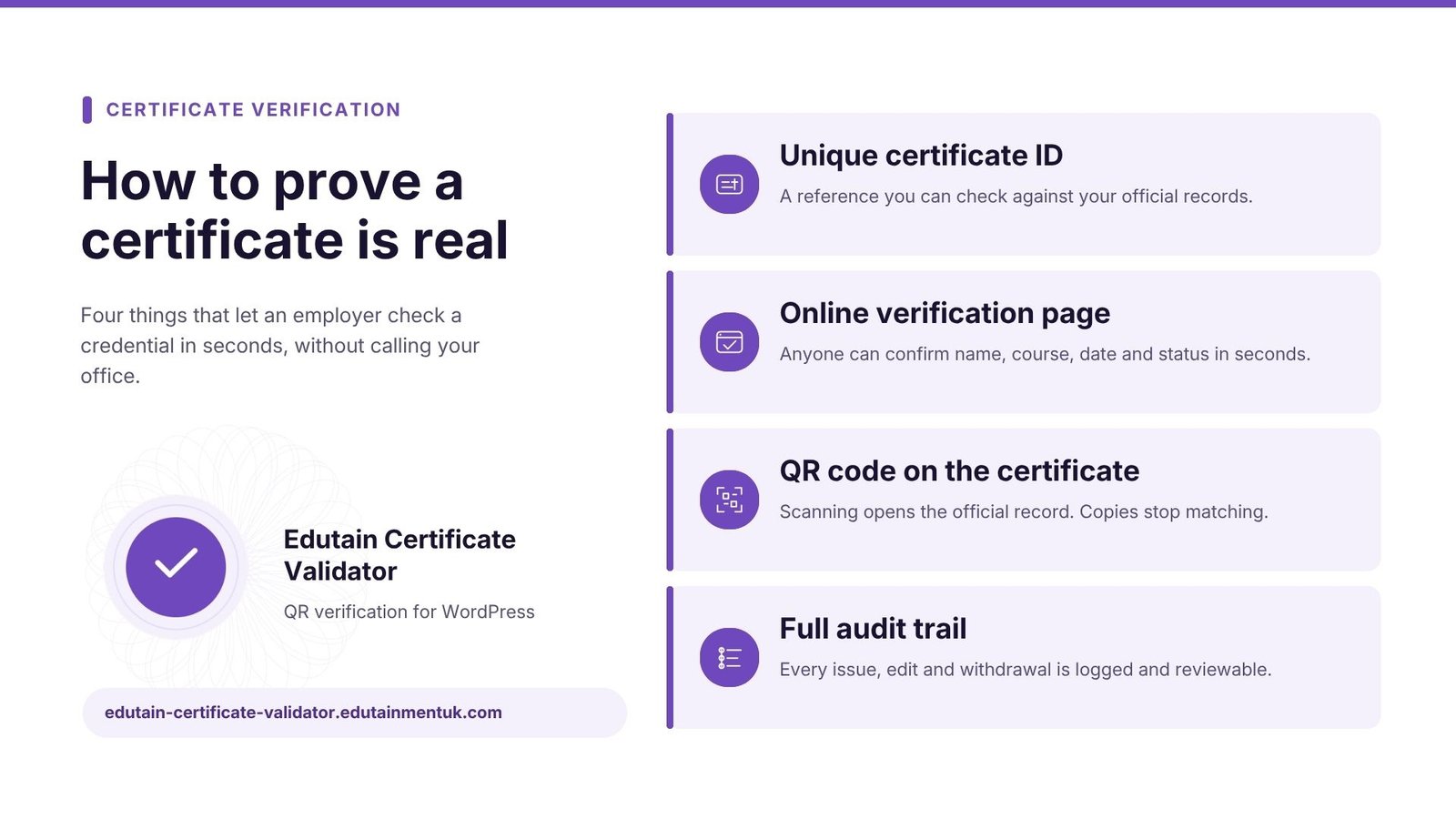
Assigning a unique identification number to every certificate is one of the simplest ways to improve authenticity. A certificate ID creates a specific reference that can be checked against official records.
Instead of relying only on the appearance of a certificate, employers and other organisations can verify whether the certificate number exists, belongs to the correct person, and matches the original issue details.
Provide Online Certificate Verification
An online verification system allows authorised users to confirm certificate details through an official platform. This removes the need for manual checks and helps identify fraudulent documents quickly.
A verification page can display important information such as:
- Certificate holder’s name
- Course or qualification completed
- Date of issue
- Certificate status
- Issuing organisation
Certificate verification platforms such as Edutain Certificate Validator (EDCV) can help organisations create online verification records, making it easier for employers and other third parties to check certificate details against the information originally issued.
Add QR Code Verification
QR code verification provides a quick and convenient way to check certificate authenticity. A QR code placed on a certificate can link directly to a secure verification page containing the original certificate details.
When scanned, the QR code allows employers, learners, or other third parties to confirm whether the certificate was genuinely issued by the organisation.
This makes it harder for fraudsters to create convincing copies because the information must match the official verification record.
To understand how QR codes help protect certificates against fraud, explore our detailed guide on the importance of QR code certificate verification, including its benefits, verification process and role in certificate security.
Maintain Secure Certificate Records
Secure certificate records are essential for preventing unauthorised changes and protecting credential information. Organisations should maintain accurate digital records of all issued certificates, including certificate details, issue dates, and recipient information.
A secure record system helps organisations:
- Track issued certificates
- Identify suspicious activity
- Confirm certificate ownership
- Prevent unauthorised modifications
Without reliable records, it becomes much harder to distinguish genuine certificates from fraudulent ones.
Restrict Certificate Creation Access
Controlling who can create and issue certificates is an important part of certificate fraud prevention. Organisations should ensure that only authorised staff members can generate certificates or make changes to certificate records.
Access controls can help prevent:
- Unapproved certificate creation
- Internal misuse
- Unauthorised edits
- Incorrect certificate information
A secure issuing process protects both the organisation and the individuals who have earned legitimate qualifications.
Keep an Audit Trail of Certificate Activity
Maintaining an audit trail allows organisations to track actions related to certificate creation and management. This includes recording when certificates are created, updated, verified, or withdrawn.
An audit trail provides transparency and helps organisations investigate suspicious activity. If a certificate is questioned, the organisation can review its history and confirm whether any changes were made after the original issue.
How to Detect a Fake Certificate Online?
With the increasing use of digital credentials, knowing how to identify a fake certificate has become essential for employers, organisations, and individuals. A certificate may appear professional and authentic at first glance, but only proper certificate verification can confirm whether it was genuinely issued by an authorised organisation.
If you’re unsure whether a certificate is genuine, our blog on how to check if a certificate is original or fake online explains the warning signs to look for and the methods you can use to verify its authenticity.
The following steps can help verify whether a certificate is legitimate:
Check the Certificate ID
Most genuine certificates include a unique certificate number, reference code, or identification ID. This information allows the certificate to be matched with official records held by the issuing organisation.
When checking a certificate, confirm that:
- The certificate ID exists in the issuer’s records.
- The details match the certificate holder.
- The certificate status is still valid.
A missing, duplicated, or invalid certificate ID can be a warning sign of possible fraud.
Verify Through Official Online Records
A reliable way to confirm certificate authenticity is by using the issuing organisation’s official verification system. Many organisations provide online verification pages where users can enter certificate details and check whether the record exists.
Official verification should confirm important information such as:
- Certificate holder’s name
- Course or qualification completed
- Date of completion
- Issuing organisation
- Certificate status
Certificate verification platforms such as Edutain Certificate Validator (EDCV) can help organisations maintain online certificate records and provide verification links that allow employers and other third parties to check certificate details.
Avoid relying only on a digital copy provided by the certificate holder, as documents can be edited or duplicated.
Scan QR Codes
Many modern certificates include QR codes that connect directly to a verification page. Scanning the QR code allows users to quickly access the original certificate record and confirm its authenticity.
When scanning a QR code, check that it:
- Leads to the official issuer’s website.
- Displays matching certificate information.
- Shows a valid certificate record.
A QR code that redirects to an unrelated website or displays different information may indicate a suspicious certificate.
Confirm Issuer Details
A genuine certificate should contain accurate information about the organisation that issued it. Verify details such as:
- Organisation name
- Website address
- Contact information
- Accreditation or registration details where applicable
Fraudulent certificates often use copied logos, incorrect names, or fake organisation details to appear legitimate.
Compare Certificate Information
Carefully compare the certificate details with the information provided by the certificate holder or the issuing organisation. Look for inconsistencies such as:
- Different names or spellings
- Incorrect dates
- Unusual formatting
- Missing certificate numbers
- Details that do not match official records
A proper verification process helps identify these issues before a fraudulent certificate is accepted.
Best Practices for Certificate Security and Fraud Prevention
Protecting certificates requires more than creating a professional-looking document. Organisations need strong processes and reliable technology to ensure certificates cannot be easily copied, modified, or misused. Effective certificate security helps maintain trust in qualifications, while proper fraud certificate prevention measures protect both certificate issuers and recipients.
The following best practices can help organisations create a more secure certificate management process:
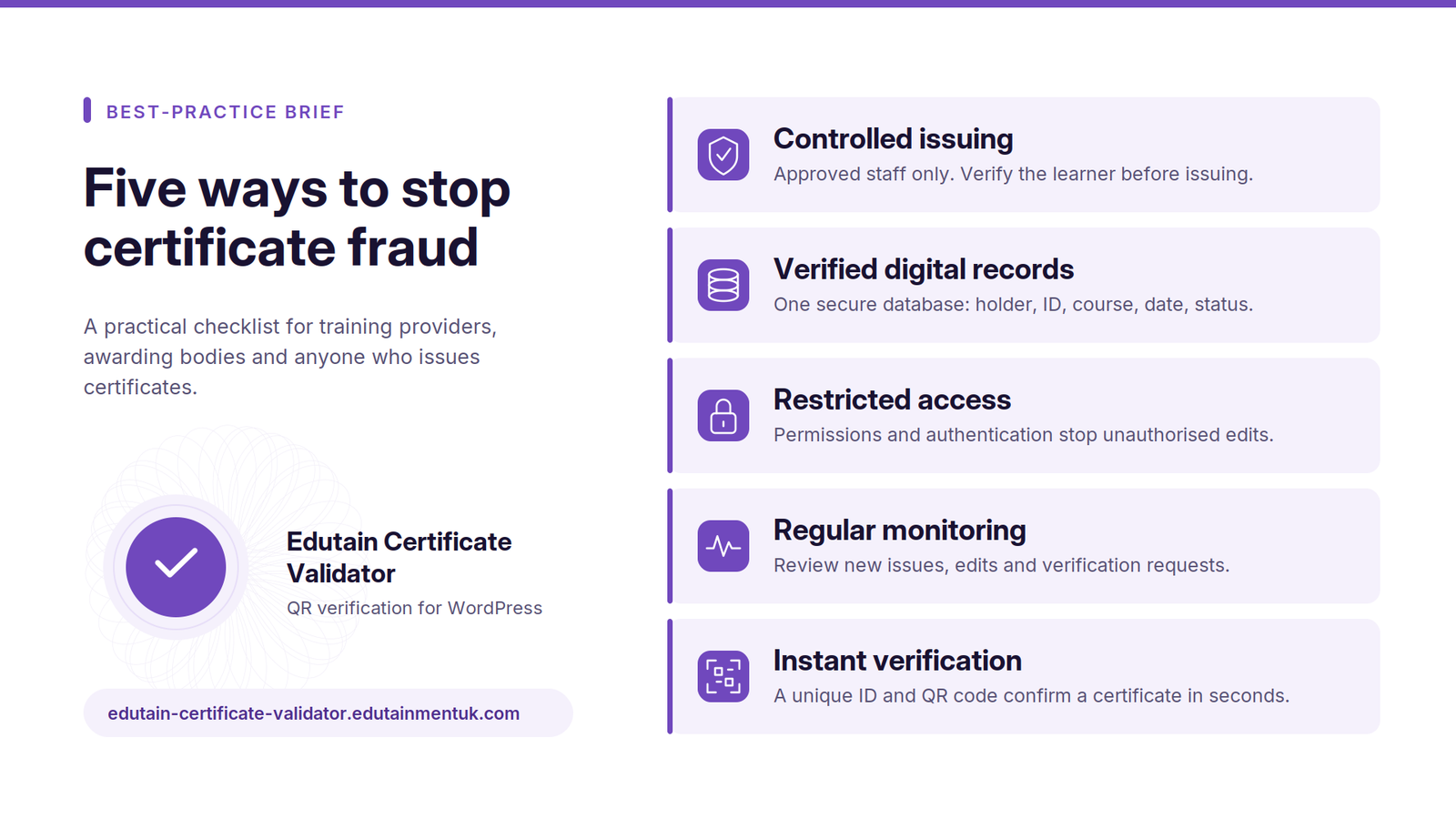
Secure Certificate Issuing Process
A secure issuing process ensures that certificates are created only for individuals who have genuinely completed the required course, training, or qualification.
Organisations should:
- Verify learner or recipient information before issuing certificates.
- Use authorised systems for certificate generation.
- Maintain clear procedures for creating, updating, and withdrawing certificates.
- Ensure certificates are issued only by approved staff members.
A controlled issuing process reduces the risk of unauthorised certificates being created.
Maintain Verified Digital Records
Accurate digital records are essential for reliable certificate verification. Organisations should keep a secure database containing details of every certificate issued.
Important records may include:
- Certificate holder information
- Certificate ID
- Course or qualification details
- Date of issue
- Certificate status
Verified records allow organisations to quickly confirm whether a certificate is genuine and identify any suspicious activity.
Control Access to Certificate Systems
Limiting access to certificate management systems is a key part of maintaining certificate security. Only authorised users should be able to create, edit, or manage certificate records.
Access controls help prevent:
- Unauthorised certificate creation
- Unapproved changes to certificate details
- Accidental data modifications
- Internal misuse
Using user permissions and authentication methods ensures that certificate information remains protected.
Monitor Certificate Activity Regularly
Regular monitoring helps organisations identify unusual activity before it becomes a larger problem. Reviewing certificate records and system activity can reveal potential security issues.
Organisations should monitor:
- Newly issued certificates
- Certificate changes or updates
- Verification requests
- Suspicious access attempts
Continuous monitoring strengthens fraud certificate prevention by allowing problems to be identified and addressed quickly.
Use Reliable Verification Systems
A reliable verification system provides confidence that certificates can be checked easily and accurately. Instead of depending only on visual document checks, organisations should provide methods for confirming certificate authenticity.
Effective verification systems may include:
- Online certificate verification pages
- Unique certificate identifiers
- QR code verification
- Secure digital records
Preventing certificate fraud requires organisations to control how certificates are created, issued, and managed. Stopping unauthorised certificate creation is essential because even a single fraudulent certificate can damage an organisation’s reputation and reduce trust in its qualifications or training programmes.
By implementing proper access controls, authentication processes, and secure certificate management practices, organisations can reduce the risk of internal misuse and unauthorised certificate generation.
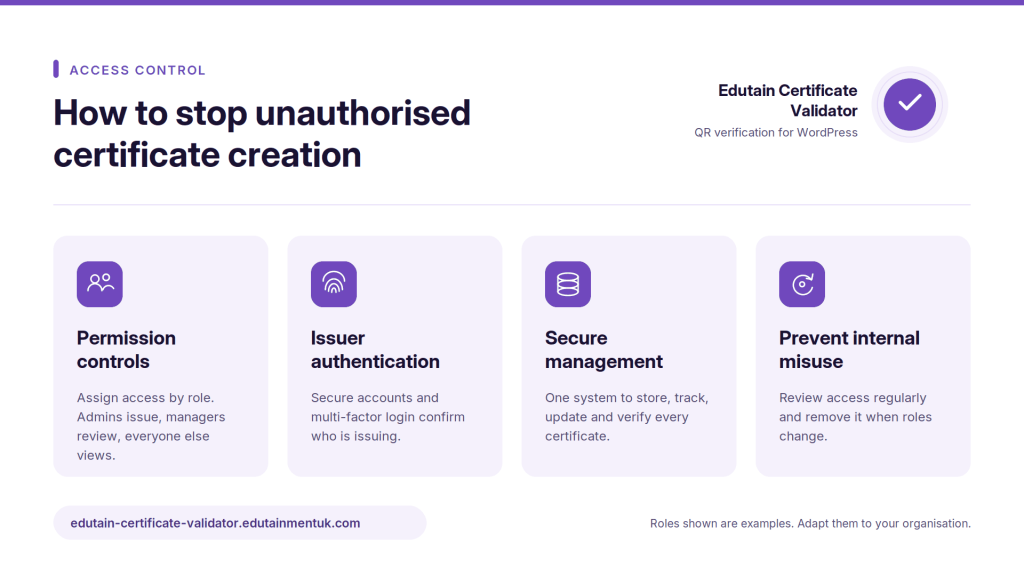
Use Permission Controls
Permission controls ensure that only authorised individuals can create or manage certificates. Organisations should assign access based on each user’s role and responsibilities.
For example:
- Training administrators may issue certificates.
- Managers may review certificate records.
- Other staff may only have viewing access.
Limiting permissions helps prevent unauthorised users from creating certificates, changing certificate details, or accessing sensitive records.
Implement Issuer Authentication
Issuer authentication confirms that certificates are created by approved individuals or systems. Organisations should verify the identity of anyone responsible for issuing certificates.
Strong authentication methods may include:
- Secure user accounts.
- Multi-factor authentication.
- Role-based access verification.
- Login activity monitoring.
This ensures that only trusted users can generate official certificates.
Maintain Secure Certificate Management
A secure certificate management system provides better control over the entire certificate lifecycle, from creation to verification and record keeping.
Organisations should use systems that allow them to:
- Store certificate information securely.
- Track issued certificates.
- Manage certificate updates.
- Verify certificate authenticity.
- Identify unusual activity.
Secure management reduces the chances of certificates being created outside approved processes.
Prevent Internal Misuse
While many certificate fraud attempts come from external sources, organisations should also protect against accidental or intentional internal misuse.
To reduce internal risks, organisations should:
- Review user access regularly.
- Remove access when staff responsibilities change.
- Monitor certificate activity.
- Keep records of certificate creation and changes.
A transparent certificate management process makes it easier to identify problems and maintain accountability.
The Role of Technology in Preventing Certificate Fraud
Technology plays an important role in improving certificate security and making credentials easier to verify. Traditional certificates can be copied, edited, or reproduced, but modern digital solutions provide stronger protection by creating secure records and allowing organisations to confirm authenticity quickly.
Effective preventing digital certificate fraud requires a combination of secure technologies that protect certificates throughout their lifecycle, from creation to verification.
QR Code Verification
QR codes provide a simple and effective way to verify whether a certificate is genuine. A QR code placed on a certificate can link directly to an official verification page containing the original certificate details.
When scanned, users can quickly confirm:
- Certificate holder information
- Course or qualification details
- Issue date
- Certificate status
- Issuing organisation
QR code verification reduces the risk of fake certificates because the information can be checked against the original digital record.
Digital Signatures
Digital signatures help confirm that a certificate was issued by a trusted organisation and has not been modified after creation.
Unlike a simple image or PDF certificate, digitally signed documents contain security information that can show whether any unauthorised changes have been made.
Digital signatures help improve trust by:
- Confirming certificate ownership.
- Protecting certificate integrity.
- Detecting unauthorised modifications.
Online Verification Platforms
Online verification platforms allow employers, institutions, and other third parties to check certificates instantly through a secure website.
Instead of manually reviewing documents, users can verify credentials by entering a certificate ID or accessing a verification link.
These platforms help organisations:
- Reduce verification time.
- Prevent acceptance of fraudulent credentials.
- Provide transparent certificate authentication.
- Improve trust in issued certificates.
Secure Databases
Secure databases provide a reliable foundation for digital certificate security by storing certificate information safely and preventing unauthorised changes.
A secure certificate database should maintain:
- Certificate records.
- Recipient details.
- Issue information.
- Verification history.
- Certificate status.
Accurate digital records make it easier to identify genuine certificates and detect suspicious activity.
Automated Validation
Automated validation systems make certificate checking faster and more accurate by verifying information without requiring manual reviews.
For example, an automated system can instantly check:
- Whether a certificate ID exists.
- Whether certificate details match official records.
- Whether a certificate is active or expired.
Automation reduces human errors and creates a more reliable verification process.
By combining QR codes, digital signatures, online verification platforms, secure databases, and automated validation, organisations can strengthen digital certificate security and create a trusted system for issuing and verifying digital credentials. These technologies help prevent fraud while making genuine certificates easier to confirm.
How Certificate Verification Platforms Help Fight Certificate Fraud
As digital certificates become more common, organisations need reliable ways to confirm that credentials are genuine. Relying only on manual checks, email confirmations, or reviewing certificate designs can be time-consuming and may not always detect sophisticated fraud attempts.
Certificate verification platforms provide a more secure and efficient approach by allowing organisations and third parties to confirm certificate authenticity through trusted digital records. These systems help strengthen certificate security, improve trust, and support effective fraud prevention.
Problems with Manual Certificate Verification
Traditional certificate verification often requires someone to manually review documents, contact the issuing organisation, or compare records individually. This process can create several challenges:
- Time-consuming verification procedures.
- Delays when confirming qualifications.
- Increased risk of human error.
- Difficulty managing large numbers of verification requests.
- Limited ability to detect altered or fake certificates.
For organisations issuing hundreds or thousands of certificates, manual verification becomes difficult to manage effectively.
Benefits of Certificate Verification Platforms
A digital verification platform creates a faster and more reliable way to authenticate certificates. Instead of depending on document appearance alone, organisations can provide a secure system where certificates can be checked instantly.
Key benefits include:
- Instant verification: Employers and other third parties can confirm certificate details quickly.
- Improved trust: Verified digital records help prove that qualifications are genuine.
- Reduced fraud risk: Secure verification makes it harder for fake or modified certificates to be accepted.
- Better record management: Organisations can maintain accurate records of issued certificates.
- Greater transparency: Certificate holders can share credentials that others can verify confidently.
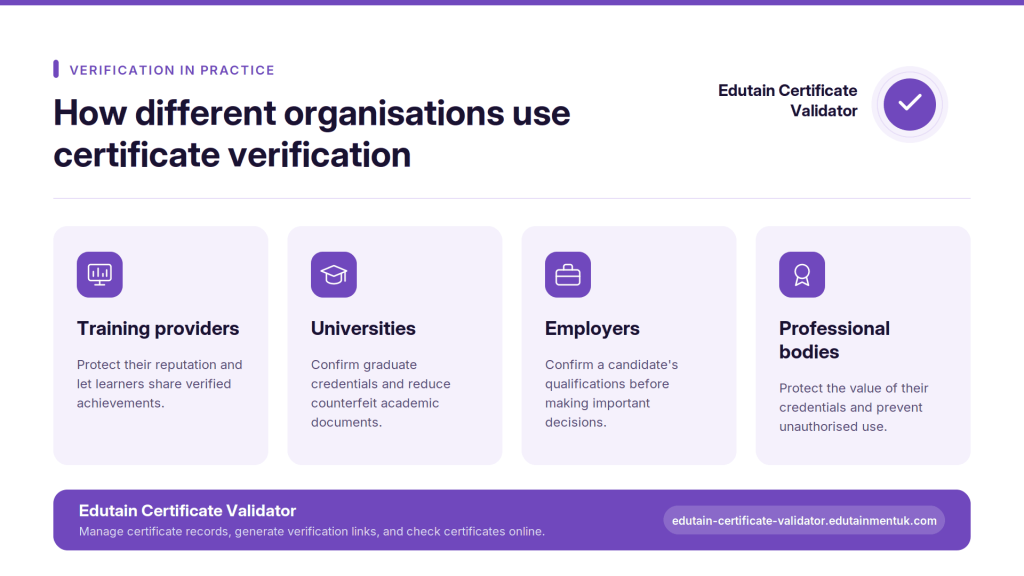
How Different Organisations Use Certificate Verification Platforms
Training Providers
Training providers issue certificates to demonstrate that learners have completed courses or professional development programmes. A verification platform helps them protect their reputation by ensuring that only genuine certificates are recognised.
It also allows learners to share verified achievements with employers and professional networks.
Universities and Educational Institutions
Universities and educational organisations rely on trusted qualifications to maintain academic credibility. Digital verification systems help them confirm graduate credentials and reduce the risk of counterfeit academic documents.
Employers
Employers often review certificates during recruitment and professional development processes. Verification platforms allow them to quickly confirm whether a candidate’s qualifications and training records are authentic before making important decisions.
Professional Organisations
Professional bodies and certification providers need to protect the value of their credentials. A secure verification system helps maintain confidence in professional certifications while preventing unauthorised certificate use.
Solutions such as Edutain Certificate Validator (EDCV) help organisations create a more reliable certificate verification process by providing tools for managing certificate records, generating verification links, and allowing certificates to be checked online. By moving from manual checks to secure digital verification, organisations can reduce fraud risks and maintain greater trust in their credentials.
Conclusion
Preventing certificate fraud requires more than relying on visual security features or professional-looking documents. As digital certificates become easier to share and reproduce, organisations need stronger methods to protect their credentials and maintain trust.
Reliable verification systems, secure certificate records, controlled access, and digital authentication methods help organisations reduce the risk of fake certificates and unauthorised use of credentials. By adopting modern verification processes, certificate issuers can make it easier for employers, institutions, and other stakeholders to confirm genuine achievements.
Digital verification not only protects the value of certificates but also strengthens confidence between organisations and certificate holders. A secure certificate management approach ensures that qualifications, training records, and professional achievements remain trusted in an increasingly digital world.
FAQs
How can forgery be stopped?
Certificate forgery can be reduced by using secure certificate issuing processes, unique certificate identification numbers, controlled access, and reliable verification systems. Organisations should maintain accurate digital records and make it easy for employers or other third parties to confirm whether a certificate is genuine.
How do you verify if a certificate is genuine?
A certificate can be verified by checking its certificate ID, confirming details through the issuer’s official verification system, scanning any QR code provided, and comparing the certificate information with official records. A genuine certificate should match the details stored by the issuing organisation.
How do I identify a fake certificate online?
To identify a fake certificate online, check whether the certificate has a valid verification link, confirm the certificate ID, review the issuer’s details, and compare the information with official records. Certificates that contain incorrect details, missing references, or unverifiable information may require further investigation.
Can fake certificates be detected online?
Yes, fake certificates can often be detected online through digital verification systems. Organisations can use certificate IDs, QR code verification, and online records to confirm whether a certificate was officially issued and whether the details have been changed.
How do organisations prevent certificate fraud?
Organisations prevent certificate fraud by using secure certificate management systems, restricting certificate creation access, maintaining verified records, and providing online verification methods. These processes help prevent unauthorised certificates from being created and make genuine credentials easier to confirm.
What is the best way to stop fake certificates?
The most effective way to stop fake certificates is to combine secure certificate creation processes with digital verification technology. Using unique certificate IDs, QR codes, online verification pages, and controlled access helps organisations protect their credentials and reduce fraud risks.
How can digital certificates be protected from fraud?
Digital certificates can be protected from fraud by storing records securely, limiting access to authorised users, using authentication methods, and enabling verification through trusted systems. Digital tools such as QR codes and secure verification platforms make it harder for fraudulent certificates to be accepted.
What is certificate fraud prevention?
Certificate fraud prevention refers to the methods and technologies used to stop fake, altered, or unauthorised certificates from being created or misused. It includes secure certificate issuing processes, digital verification systems, access controls, and maintaining accurate certificate records.

Tamim is a digital marketing professional who enjoys learning about online education and new digital technologies. He writes about digital tools, certifications, marketing, and simple ways businesses and educators can improve their online presence.