Certificates are widely used to demonstrate education, professional training, skills, and achievements. As more organisations move towards digital credentials, certificates are now easier to issue, share, and store online.
However, this convenience has also increased concerns around the use of a fake certificate that may appear genuine but does not represent a real qualification or achievement.
Knowing how to check certificate original or fake online is important for employers, educational institutions, training providers, and individuals who need to confirm whether a credential is legitimate.
A certificate may look professional and contain official branding, but appearance alone is not enough to prove authenticity.
The most reliable approach is using proper certificate verification methods, such as checking certificate IDs, comparing details with official records, using verification portals, or confirming information directly with the issuing organisation.
This guide explains practical ways to identify genuine certificates, spot warning signs of fraudulent documents, and understand how online verification systems help protect trust in digital credentials.
Why Is Certificate Verification Important?
Certificates provide evidence that a person has completed specific training, achieved a qualification, or demonstrated a particular level of knowledge and skill.
Because certificates are often used for employment, further education, and professional development, it is important that organisations can confirm whether a credential is genuine.
The value of a certificate depends on trust. According to Ofqual, qualifications can provide pathways to employment, relocation, or further education. Employers therefore need confidence that certificates accurately represent the holder’s skills and knowledge.
Without proper certificate verification, organisations may unknowingly accept a fake certificate or fraudulent qualification. Organisations can reduce these risks by following practical steps to prevent certificate forgery and fake certificates online.
Ofqual defines qualification fraud as including activities such as creating, buying, or using fake certificates for regulated qualifications.
It also warns that people who gain qualifications fraudulently may make false claims about what they know or can do.
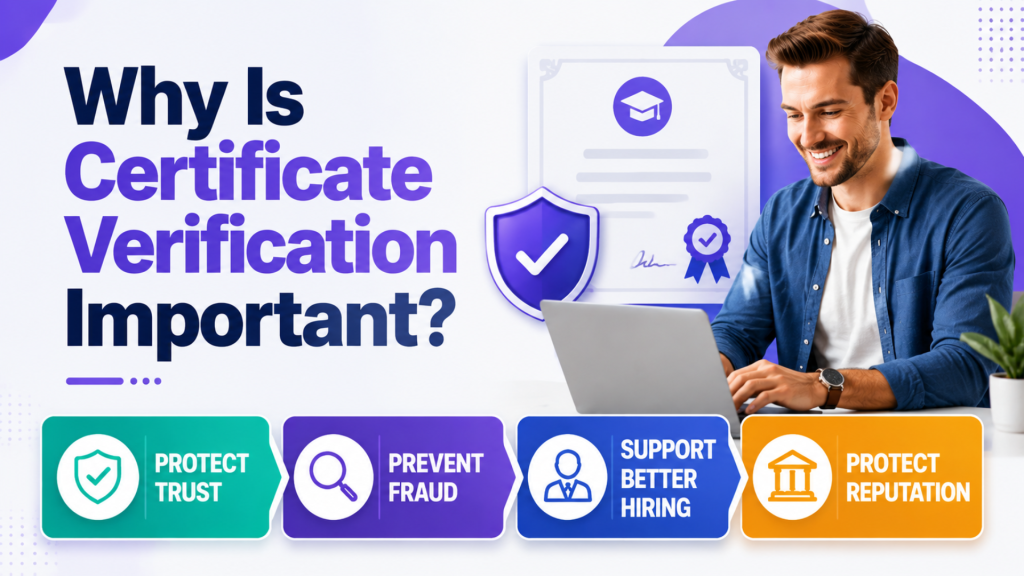
Protect Trust in Qualifications
Effective certificate verification helps protect the credibility of qualifications by allowing employers, educational institutions, and professional organisations to confirm that certificates were genuinely issued by authorised providers.
When credentials can be verified through official records, genuine certificate holders receive proper recognition, while fraudulent claims become easier to identify.
Prevent Fraudulent Claims
A fake certificate can misrepresent a person’s education, training, or professional ability. Verification processes help organisations check whether certificate details match official records before accepting them.
This is especially important for qualifications linked to employment, licensing, or professional responsibilities, as these credentials may influence important decisions.
Help Employers Make Informed Decisions
Employers often use certificates as part of recruitment, compliance checks, and professional development reviews. Reliable verification allows employers to confirm that candidates have completed the qualifications or training they claim to hold.
Protect Training Providers and Issuing Organisations
Training providers, awarding organisations, and educational institutions invest significant resources in maintaining the quality and reputation of their programmes.
Certificate fraud can weaken confidence in legitimate credentials and damage the reputation of the organisations that issue them.
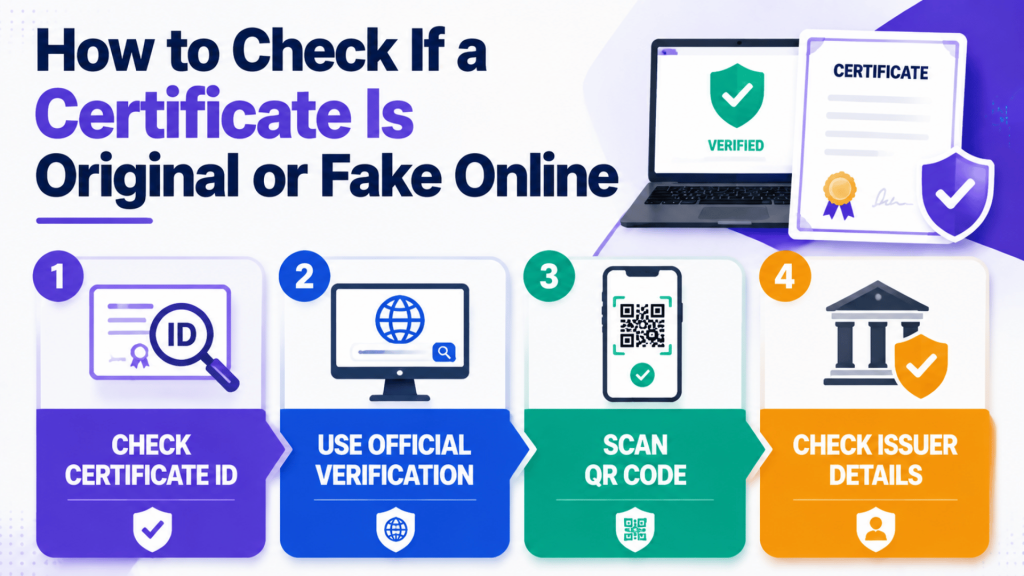
How to Check If a Certificate Is Original or Fake Online: 4 Simple Steps
Knowing how to verify whether a certificate is genuine online is important when checking qualifications, training records, and professional credentials.
A certificate may look authentic, but its appearance alone does not prove that it was officially issued by the stated organisation.
The most reliable method is using an online certificate checker or verification system that allows certificate details to be compared against records held by the issuing organisation.
A proper certificate checking process should confirm key information such as the certificate holder, issuing organisation, qualification details, and certificate status.
The following steps can help identify whether a certificate is genuine or potentially fraudulent.
1. Check the Certificate ID or Certificate Number
Most legitimate certificates include a unique reference number, certificate ID, or registration number. This identifier allows the certificate to be matched against official records maintained by the issuing organisation.
When checking a certificate number, confirm:
- The certificate ID exists in the issuer’s records.
- The certificate details match the person’s information.
- The qualification or training information is accurate.
- The certificate status is still valid.
A missing certificate number, duplicated ID, or reference that cannot be verified may indicate a potential issue.
2. Use the Issuer’s Official Verification Portal
The safest way to complete certificate verification is through the official verification portal provided by the organisation that issued the certificate.
A verification portal allows users to enter certificate information and compare it with the issuer’s stored records. Depending on the system, it may display details such as:
- Certificate holder’s name
- Qualification or course completed
- Date of issue
- Certificate number
- Current certificate status
Always use the official website of the issuing organisation rather than relying only on a certificate file or link provided by another person. This reduces the risk of accepting altered or counterfeit documents.
3. Scan the QR Code on the Certificate
Many modern certificates include QR codes that make verification faster and more convenient. A QR code can link directly to an official verification page where certificate details can be checked.
When using QR code verification:
- Scan the QR code using a trusted device.
- Check that it directs to the official organisation’s website.
- Confirm that the displayed information matches the certificate.
- Verify that the certificate status is valid.
A QR code alone does not guarantee authenticity. It should connect to a reliable verification record controlled by the issuing organisation.
Not all QR codes offer the same level of security. To understand what makes them useful for checking certificates, read our blog on the importance of QR code certificate verification, including how it works and what to look for when scanning a certificate.
4. Confirm the Issuing Organisation Details
Checking the issuing organisation is an important part of confirming certificate authenticity. A genuine certificate should clearly identify who issued it and provide information that can be independently verified.
Check:
- Organisation name
- Official website address
- Contact details
- Accreditation or registration information where relevant
Fraudulent certificates may use copied logos, incorrect organisation names, or fake contact details to appear legitimate.
For professional and management system certificates, UKAS recommends checking certification information and confirming that certificates have been issued by appropriately recognised certification bodies.
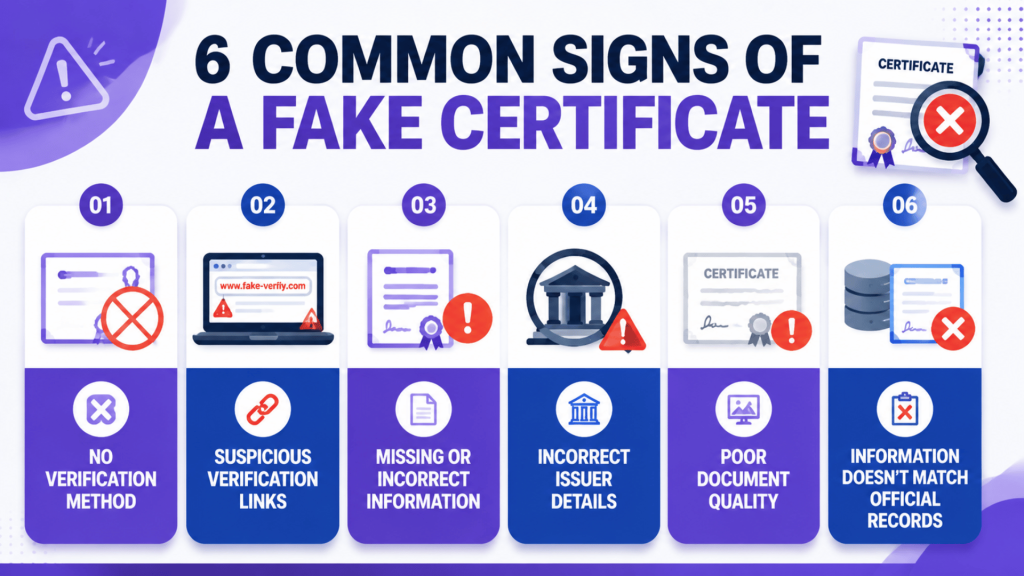
6 Common Signs of a Fake Certificate
Although visual inspection can provide useful clues, the most reliable way to confirm authenticity is through proper certificate verification with the issuing organisation.
The following signs can help identify certificates that may require further checking.
A fake certificate is not always easy to identify because fraudulent documents can be designed to look similar to genuine certificates. Some may copy logos, layouts, and official wording to appear legitimate.
However, careful checking can reveal warning signs that help with detecting fake certificate attempts.
1. No Verification Method Available
One of the biggest warning signs is when a certificate provides no way to confirm its authenticity. Genuine certificates issued by professional organisations, training providers, or educational institutions often include a certificate number, verification link, QR code, or another method that allows details to be checked.
A certificate without any verification process makes it difficult to confirm whether it was actually issued by the claimed organisation.
2. Suspicious Verification Links
Some fraudulent certificates include links that appear to offer verification but do not connect to a genuine source.
When checking a certificate, always confirm that the verification page belongs to the official website of the issuing organisation.
A suspicious link may:
- Redirect to an unrelated website.
- Use a domain name that looks similar but is not official.
- Display information that does not match the certificate.
A genuine verification system should connect the certificate details with records maintained by the issuer.
3. Missing or Incorrect Certificate Information
Legitimate certificates usually contain important identifying details, such as a certificate number, recipient name, qualification details, and issue date. Missing information or inconsistencies can be a sign of a fraudulent document.
For example, a certificate may contain:
- An invalid certificate number.
- Incorrect spelling of the holder’s name.
- Dates that do not match the claimed course completion.
- Qualification details that cannot be confirmed.
These details should always be compared with official records where possible.
4. Incorrect Issuer Details
Checking the issuing organisation is an important step in spotting fake certificate attempts. Fraudulent certificates may use copied branding, incorrect contact details, or names that closely resemble legitimate organisations.
Before accepting a certificate, confirm:
- The organisation name is correct.
- The website belongs to the genuine issuer.
- Contact details are valid.
- Any claimed accreditation can be verified.
A certificate is only as trustworthy as the organisation that issued it.
5. Poor Document Quality or Unusual Formatting
While a professional design does not guarantee authenticity, poor-quality documents can be a warning sign.
Spelling mistakes, inconsistent formatting, low-quality logos, unusual fonts, or missing information may indicate that a certificate has been created or modified without authorisation.
However, visual checks alone are not enough. A well-designed fake certificate can still appear convincing, which is why verification against official records remains the most reliable method.
6. Information Does Not Match Official Records
The strongest indicator of a fake certificate is often a mismatch between the document and the issuer’s records.
Details such as the certificate holder’s name, qualification, completion date, or certificate number should match the information stored by the issuing organisation.
If the information cannot be confirmed through an official source, the certificate should be treated with caution.
Can Fake Certificates Be Verified Online?
Yes, fake certificates can often be detected online when the issuing organisation provides a reliable verification system.
An online certificate checker can compare details such as the certificate ID, holder’s name, qualification information, issue date, and current status against official records.
However, online verification is only reliable when the issuer maintains accurate digital records. A professional-looking document alone cannot confirm authenticity, so certificate details should always be checked against a trusted source.
If the information matches the issuer’s records, the certificate is more likely to be genuine. If details are missing, incorrect, or cannot be found, the certificate should be investigated further.
Online verification can also make certificate checking faster than manual methods, especially for organisations that need to review large numbers of credentials.
What Is an Online Certificate Checker?
An online certificate checker is a digital system that allows organisations, employers, and other authorised users to confirm whether a certificate is genuine.
Instead of relying only on a PDF document or printed copy, certificate checking systems compare certificate details against secure digital records created by the issuing organisation.
These systems help answer important questions such as:
- Was this certificate actually issued?
- Does the certificate belong to the named individual?
- Are the qualification or training details accurate?
- Is the certificate still valid?
A reliable certificate verification platform creates a connection between an issued certificate and an official verification record, making it easier to confirm authenticity without lengthy manual checks.
How Does a Certificate Checking System Work?
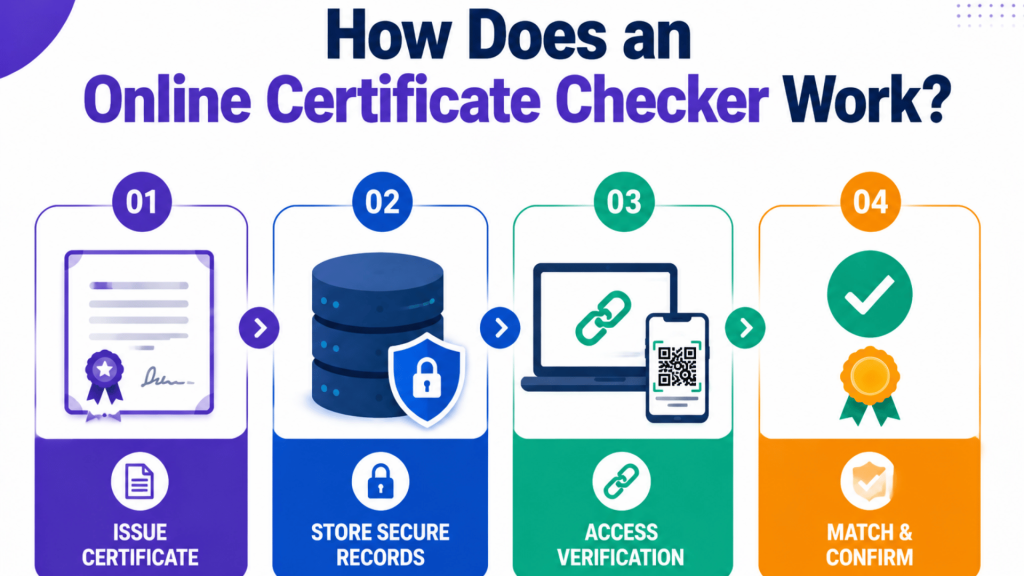
A typical certificate verification process follows these steps:
- Certificate creation
The organisation issues a certificate and stores important details, such as the certificate holder’s name, course information, issue date, and certificate ID. - Secure record storage
The certificate information is saved in a structured digital record that can be checked later. - Verification access
A verification link, certificate ID, or QR code allows employers, learners, or third parties to access the verification page. Organisations that want to set up this type of verification can follow the certificate verification documentation for step-by-step guidance on installation, certificate records, verification pages, and other features. - Information comparison
The system compares the submitted certificate details with the original records to confirm whether the information matches.
This process helps reduce dependence on manual emails, document reviews, and time-consuming confirmation requests.
How Organisations Use Certificate Verification Platforms
Training providers, educational institutions, and professional organisations often issue large numbers of certificates. Managing these certificates manually can become difficult as records grow.
Certificate verification is particularly important for organisations that deliver online learning and professional training, where digital credentials are increasingly used to demonstrate course completion and skills.
Edutainment UK provides online learning and digital education solutions, making reliable certificate management and verification an important part of the wider digital learning ecosystem.
A digital certificate verification platform helps organisations:
- Maintain organised certificate records.
- Provide faster verification for employers and learners.
- Reduce the risk of unauthorised certificate use.
- Improve confidence in issued credentials.
Employers can also use these systems during recruitment or compliance checks to confirm that candidates’ certificates are genuine before making important decisions.
How Certificate Verification Platforms Help Prevent Fraud
Traditional certificate verification often relies on manual processes, such as reviewing documents, contacting issuing organisations, or comparing certificate details individually.
While this approach may work for a small number of certificates, it becomes difficult to manage when organisations issue hundreds or thousands of credentials.
Qualification fraud can reduce trust in legitimate achievements and create challenges for organisations responsible for issuing and accepting certificates.
Secure verification processes help protect the value of genuine credentials and make fraudulent documents easier to identify.
A certificate verification platform provides a more efficient way to manage and authenticate digital credentials. Instead of relying only on the appearance of a certificate, these systems connect certificates with secure records that can be checked online.
A verification platform can help organisations:
- Store and manage certificate records securely.
- Create verification pages for issued certificates.
- Generate verification links or QR-based checking options.
- Allow employers, learners, and other authorised users to confirm certificate details quickly.
- Reduce the time required for manual verification.
- Lower the risk of accepting fraudulent or altered certificates.
- Maintain centralised and accurate certificate records.
- Improve trust in digital credentials by making genuine achievements easier to confirm.
Solutions such as Edutain Certificate Validator (EDCV) help organisations create a more reliable certificate verification process by managing certificate records, generating verification links, and enabling certificates to be checked online.
By replacing manual verification methods with secure digital checking, organisations can reduce fraud risks, improve verification efficiency, and build greater trust in the certificates they issue.
4 Benefits of Using a Certificate Verification Platform
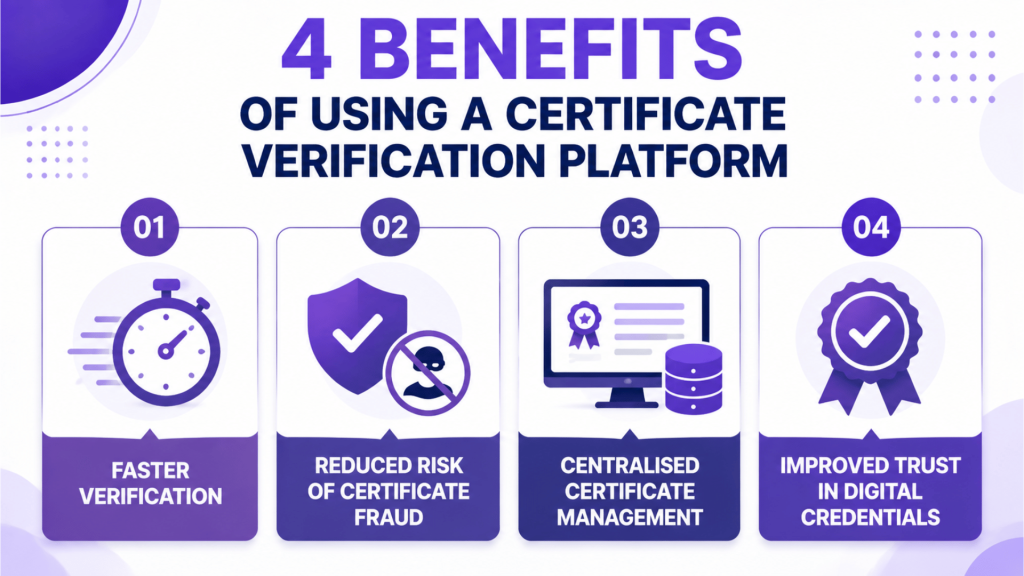
1. Faster Verification
Manual certificate checks can take time, especially when organisations need to respond to multiple verification requests. Online verification platforms allow certificate details to be checked instantly through a secure digital record.
2. Reduced Risk of Certificate Fraud
A certificate verification platform makes it harder for fake or modified certificates to be accepted because verification depends on official records rather than the document appearance alone.
3. Centralised Certificate Management
Organisations can manage issued certificates in one place, making it easier to track certificate information, update records, and maintain accurate credential data.
4. Improved Trust in Digital Credentials
Reliable verification gives employers and other third parties greater confidence when reviewing certificates. It also helps genuine certificate holders prove their achievements more easily.
For organisations using WordPress websites, a certificate validator for WordPress can provide a practical way to add online certificate verification features directly to their website.
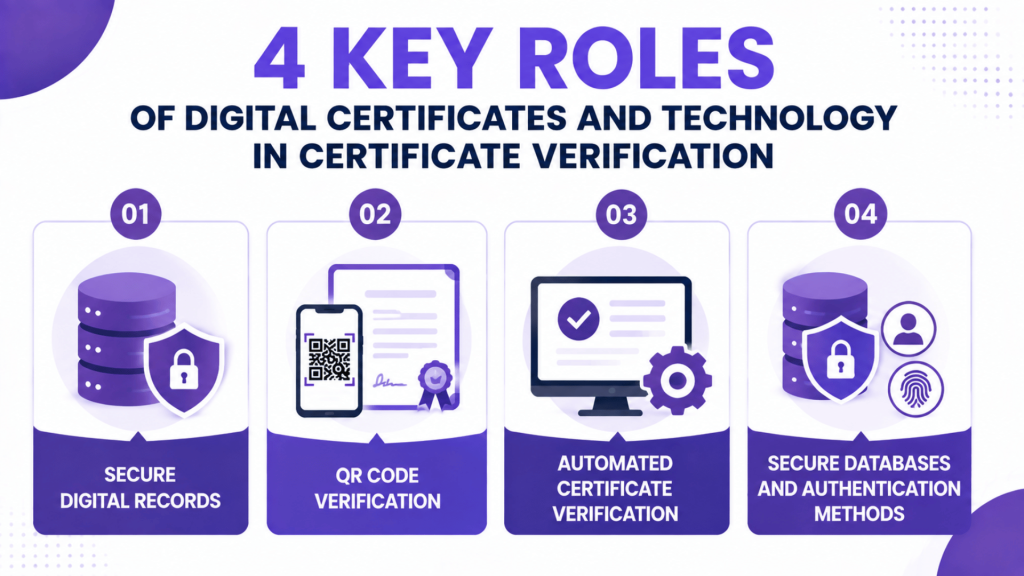
4 Key Roles of Digital Certificates and Technology in Certificate Verification
Technology has changed how organisations issue, store, and verify credentials. Traditional paper certificates and simple PDF documents can be copied, edited, or shared without permission.
Digital certificates improve this process by connecting credentials with secure records and verification methods that help confirm whether information is genuine.
A reliable digital certificate verification platform combines different technologies, such as secure databases, QR codes, authentication methods, and automated checks, to make certificate verification faster and more reliable.
1. Secure Digital Records
Secure digital records provide a reliable foundation for certificate verification by storing certificate information in a controlled database rather than relying only on a PDF or printed document.
When a certificate is checked, the verification system can compare the submitted details with the original stored record to confirm whether the credential is authentic.
2. QR Code Verification
QR codes can connect physical or digital certificates directly to online verification records, making it easier to confirm certificate details.
However, a QR code alone does not prove authenticity. The link should lead to the legitimate issuing organisation’s verification system, where the certificate information can be checked against official records.
3. Automated Certificate Verification
Automated verification systems help organisations check certificate information against stored records more efficiently, especially when handling large numbers of credentials.
Automation can reduce manual workload, minimise human error, process more verification requests, and help identify incorrect or suspicious certificate information.
4. Secure Databases and Authentication Methods
Secure databases help protect certificate information from unauthorised changes. Organisations can use access controls and authentication methods to ensure that only authorised users can create, update, or manage certificate records.
Strong authentication and security controls help protect against:
- Unauthorised certificate creation.
- Incorrect certificate changes.
- Misuse of certificate information.
Digital security standards developed by organisations such as NIST emphasise the importance of authentication and data integrity in protecting digital information.
Frequently Asked Questions (FAQs)
How do I check if a certificate is original or fake online?
To check whether a certificate is original or fake online, verify it through the issuing organisation’s official verification system.
Check details such as the certificate ID, certificate number, holder’s name, qualification details, issue date, and certificate status. A genuine certificate should match the records maintained by the organisation that issued it.
How can I verify a certificate online for free?
Many organisations provide free online verification options through their official websites. You can usually verify a certificate by entering a certificate number, reference ID, or other details provided on the document. If the organisation does not offer online verification, you may need to contact them directly.
What information is needed to verify a certificate?
The information required depends on the issuing organisation, but most verification systems use details such as:
- Certificate ID or certificate number
- Certificate holder’s name
- Course or qualification details
- Date of issue or completion
- Verification code or QR code
These details are compared with official records to confirm authenticity.
Can fake certificates be detected?
Yes, fake certificates can often be detected through proper verification methods. Checking certificate numbers, using official verification portals, scanning QR codes, and comparing information with issuer records can help identify fraudulent documents.
However, visual checks alone may not always be enough because some fake certificates can be designed to look authentic.
What is an online certificate checker?
An online certificate checker is a digital system that allows users to confirm whether a certificate is genuine by comparing certificate details with official records.
These systems help employers, educational institutions, and organisations verify credentials faster without relying only on manual document checks.
How does QR code certificate verification work?
QR code certificate verification works by linking a certificate to an online verification record. When someone scans the QR code, they are directed to a verification page where they can check certificate details, such as the holder’s information, qualification, and certificate status.
A QR code should always lead to the official verification system of the issuing organisation.
What is a certificate verification platform?
A certificate verification platform is a digital system that helps organisations issue, manage, and verify certificates online.
These platforms store certificate records, create verification links, and allow employers or other authorised users to confirm whether credentials are genuine.
They help organisations reduce manual checking, improve record management, and protect against certificate fraud.
How do organisations prevent certificate fraud?
Organisations prevent certificate fraud by using secure certificate management processes, unique certificate IDs, online verification systems, QR codes, controlled access, and accurate digital records.
A reliable verification process helps ensure that only genuine certificates are accepted and protects trust in issued credentials.
Can I verify a certificate without contacting the issuer?
Yes, if the organisation provides an online verification system. Users can check certificate details through verification portals, certificate IDs, or QR codes without contacting the issuer directly.
For more information, see our certificate verification FAQs for answers to common questions about online verification, QR codes, certificate records, and certificate management.
Conclusion
A certificate’s appearance alone cannot confirm whether it is genuine. Logos, formatting, and professional design can be copied or altered, so visual checks should always be supported by reliable verification.
The safest approach is to compare certificate details with official records maintained by the issuing organisation. Certificate IDs, verification portals, QR codes, and digital records can all help confirm authenticity when they are connected to a trusted source.
As digital credentials become more common, secure verification systems can help organisations reduce fraud risks, protect their reputation, and maintain confidence in the certificates they issue.

Tamim is a digital marketing professional who enjoys learning about online education and new digital technologies. He writes about digital tools, certifications, marketing, and simple ways businesses and educators can improve their online presence.