Certificates are more than just documents; they represent proof of education, training, skills, and professional achievements. For learners and professionals, a genuine certificate can demonstrate knowledge and career development, while for employers and organisations, it provides evidence that a person has completed a recognised programme or qualification.
However, the increasing use of digital documents has also created new challenges. Fake or altered certificates can damage trust, create hiring risks, and reduce the credibility of genuine credentials. Organisations need reliable ways to confirm that certificates were issued by the correct provider and that the information has not been changed.
A free certificate verification tool provides a simple way to check certificate verification details by comparing certificate information against official digital records. Instead of relying only on the appearance of a PDF or printed document, verification systems help users confirm certificate authenticity through secure records, verification links, QR codes, and other validation methods.
This guide explains how certificate verification tools work, why they are important for preventing certificate fraud, the benefits they provide for organisations and certificate holders, and how businesses can use digital verification solutions to protect trust in their credentials.
What Is a Free Certificate Verification Tool?
A free certificate verification tool is an online system that allows individuals, employers, and organisations to confirm whether a certificate is genuine by checking certificate details against trusted records. Instead of relying only on a printed document or a downloadable file, users can verify important information such as the certificate holder’s name, course details, issuing date, and registration information through a secure verification system.
A certificate verification tool helps perform certificate authenticity checks by comparing the information provided on a certificate with records maintained by the original issuer. If the certificate details match the official database, the system can confirm that the credential is valid. If the information does not match, the verification process can help identify possible errors, unauthorised changes, or fraudulent documents.
Many organisations use an online certificate checker to simplify the process of confirming certificate status. Instead of manually contacting a training provider or certification body, users can enter certificate details, scan a QR code, or follow a verification link to access the relevant records. This makes certificate verification faster, more accessible, and easier to complete.
A certificate validator works by connecting a certificate with the organisation that issued it. For WordPress users, a plugin-based solution can simplify this process by allowing website owners to create verification pages and manage certificate records. When a certificate is created, details are stored in a secure record managed by the certificate issuing organisation, such as an education provider, training company, or professional institution. During verification, the system checks whether the certificate information matches the original record.
For organisations, this connection between certificates and official records helps maintain trust in digital credentials. Certification bodies and training providers can use verification systems to protect the value of their qualifications, while learners and employers gain confidence that certificates represent genuine achievements.
Modern digital certificates make this process even more efficient by allowing credentials to be stored, accessed, and verified online. With the support of secure databases, QR codes, and authentication methods, a free certificate verification tool provides a practical solution for checking certificate validity and protecting against certificate fraud.
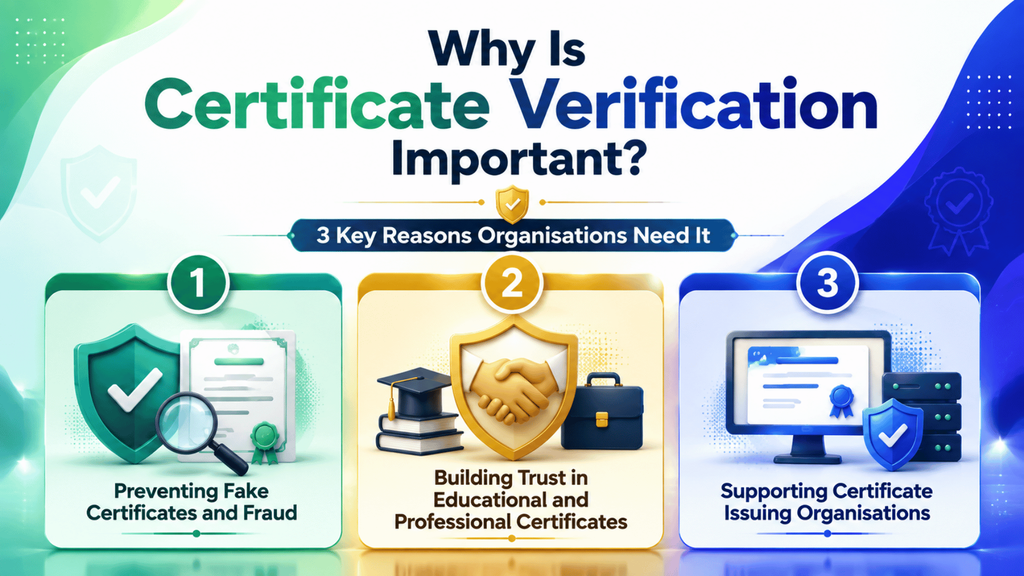
Why Is Certificate Verification Important: 3 Key Reasons Organisations Need It
Certificate verification is essential for protecting trust in education, professional development, and workplace credentials. Certificates represent proof of completed learning, acquired skills, and professional achievements, but their value depends on whether they can be trusted. A reliable verification process helps confirm certificate authenticity and ensures that qualifications are issued by legitimate organisations.
As digital certificates become more common, the risk of fake qualifications, altered documents, and misleading claims has increased. Effective verification methods help employers, institutions, and certificate providers confirm genuine achievements while reducing the impact of credential fraud.
1. Preventing Fake Certificates and Fraud
Fake certificates can create serious problems for organisations that rely on qualifications when hiring employees, approving professional development, or assessing skills. Fraudulent credentials may involve fake qualifications, edited certificate details, copied documents, or false claims about completing a course or training programme.
Fake certificate detection helps identify suspicious credentials by comparing certificate information with official records from the issuing organisation. Instead of relying only on the design or appearance of a document, verification systems can check important details such as certificate numbers, learner information, course completion details, and issue dates.
Effective fake certificate prevention requires secure systems that connect certificates with trusted records. This makes it more difficult for individuals to create fake documents, modify genuine certificates, or misuse someone else’s credentials. By improving certificate verification processes, organisations can reduce the risk of credential fraud and protect the reputation of their qualifications.
For higher education credentials, the Higher Education Degree Datacheck (HEDD) provides a verification service that allows organisations to check UK higher education qualifications and identify fraudulent degree claims.
2. Building Trust in Educational and Professional Certificates
Trust is a key factor when organisations evaluate skills and achievements. Credential verification allows employers and institutions to confirm that a person’s qualifications are genuine before making decisions related to recruitment, admissions, promotions, or professional development.
For example, universities, training providers, and employers may need to verify educational certificates and professional certifications to ensure candidates have completed the claimed programmes. A reliable verification process helps organisations assess applicants with greater confidence while allowing genuine certificate holders to demonstrate their achievements.
3. Supporting Certificate Issuing Organisations
A certificate issuing organisation needs reliable systems to create, store, and manage accurate certificate records. Without proper record management, organisations may struggle to respond to verification requests, identify fraudulent documents, or maintain the credibility of their certificates.
Digital verification systems help organisations keep certificate information organised and accessible while protecting records from unauthorised changes. Training providers, universities, and certification bodies can use these systems to improve administration, simplify verification processes, and provide faster confirmation of genuine credentials.
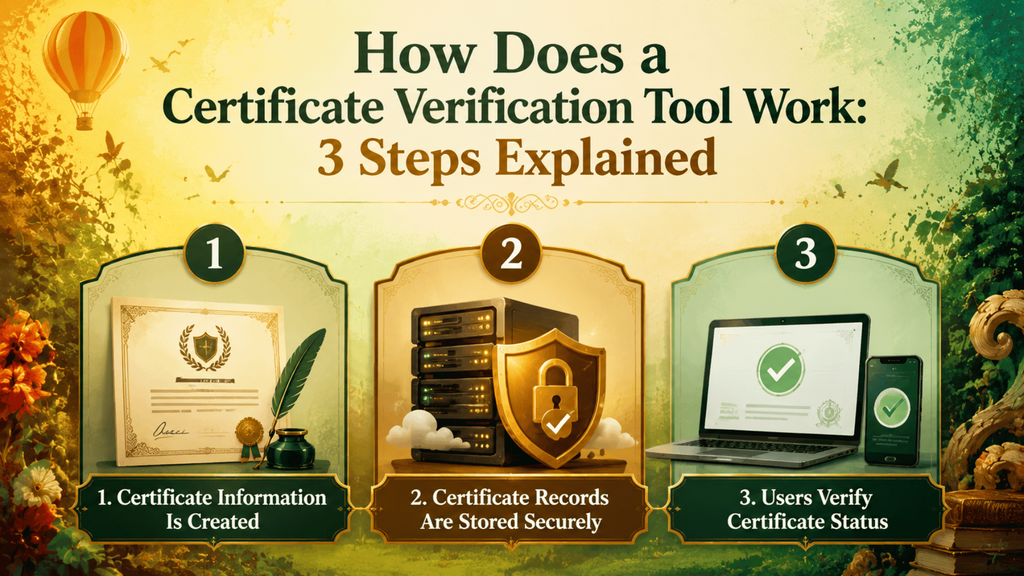
How Does a Certificate Verification Tool Work: 3 Steps Explained
A certificate verification process uses digital systems to confirm whether a certificate is genuine by comparing certificate details against official records. A certificate verification tool helps individuals, employers, and organisations complete certificate validation quickly by checking whether the information provided matches the original certificate data.
Modern digital certificate verification systems reduce reliance on manual checks by connecting certificates with secure records maintained by the issuing organisation. The process usually involves creating certificate information, storing records securely, and allowing users to check certificate status when required.
1. Certificate Information Is Created
The verification process begins when a certificate is issued by an authorised organisation, such as a training provider, educational institution, or certification body. During creation, important details are recorded to establish the identity and validity of the credential.
Certificate information may include:
- Certificate holder’s name and details
- Course, qualification, or training information
- Certificate issue date
- Certificate identification number
- Name of the issuing organisation
These details create the official record of the achievement. When someone later performs certificate validation, the system uses this original information as the reference point to confirm whether the certificate is genuine.
2. Certificate Records Are Stored Securely
After a certificate is created, the information is stored within a secure certificate database managed by the issuing organisation. Organisations using WordPress can follow setup guidance through Edutain Certificate Validator documentation to understand how certificate records and verification features are configured.
Instead of depending only on a printed certificate or PDF document, the verification system compares submitted certificate details against the original stored record. This helps identify whether information has been changed, duplicated, or incorrectly presented.
Secure storage methods also help organisations maintain accurate credential histories, manage large numbers of certificates, and provide reliable verification services for employers, learners, and other authorised users.
Protecting digital records requires appropriate security controls. The NIST Cybersecurity Framework provides guidance for organisations to manage cybersecurity risks and protect information systems.
3. Users Verify Certificate Status
The final stage of the certificate verification process happens when a user checks whether a certificate is valid. Through an online verification page, QR code, certificate number, or other verification method, users can submit certificate details and receive confirmation from the system.
This certificate status checking process may provide results such as:
- Valid certificate – The certificate details match the official records.
- Invalid certificate – The information does not match the stored records.
- Expired certificate – The certificate is no longer active or has passed its validity period.
- Certificate not found – No matching record exists in the verification database.
How Can You Verify a Certificate Online?
Most free certificate verification tools allow users to check credentials using a certificate ID or an official verification link. The exact process depends on the issuing organisation and its verification system.
For detailed instructions, read our step-by-step guide to verifying a certificate online.
What Features Should a Certificate Verification Tool Have: 6 Essential Features
A reliable online certificate validator should provide more than a simple search function. It should help organisations, employers, and certificate holders confirm credentials quickly while maintaining accuracy, security, and trust. A well-developed certificate verification validator combines secure records, automated checks, and easy-to-use features to make the verification process more efficient.
Modern certificate verification software should include features that protect certificate information, simplify credential management, and provide confidence that digital certificates are genuine.
1. Certificate ID Verification
A certificate ID verification feature allows users to confirm credentials using a unique certificate number or reference ID. Each certificate can be linked to a specific record, making it easier to identify the certificate holder, course details, issuing organisation, and completion information.
This feature helps prevent duplicate or fraudulent certificates by ensuring that every credential can be matched with an official record.
2. Certificate Database Management
A secure certificate database is a core feature of effective verification systems. It allows organisations to store, organise, and manage certificate records in one central location.
Good database management helps certificate issuing organisations maintain accurate information, update records when necessary, and respond quickly to verification requests. It also provides a reliable foundation for automated certificate checks and long-term credential management.
3. QR Code Certificate Verification
WordPress users can explore how QR-based verification works within Edutain Certificate Validator and its certificate verification features. By scanning a QR code placed on a digital or printed certificate, users can be directed to an official verification page where the credential details can be checked.
QR codes improve accessibility by reducing the need for manual data entry. However, the QR code should always connect to the issuing organisation’s official verification system to ensure reliable results.
The W3C Verifiable Credentials Data Model defines a standard model for expressing, exchanging, and verifying digital credentials.
4. Real-Time Certificate Checking
Real-time certificate checking allows users to confirm certificate status instantly by comparing submitted information with current records. This helps organisations provide faster responses and reduces delays caused by manual verification processes.
For employers and institutions handling multiple credentials, real-time checking improves efficiency while helping identify invalid, expired, or unavailable certificates.
5. Digital Certificate Records
Digital certificate records provide a secure way to store credential information electronically. Unlike traditional paper certificates, digital records can be accessed, managed, and verified whenever required.
Maintaining accurate digital records helps organisations protect certificate authenticity, improve record management, and provide a smoother experience for learners, employers, and verification users.
The 1EdTech Digital Credentials Standard supports digital credentials that represent achievements, skills, and learning outcomes in education and employment environments.
6. Secure Verification Process
A secure verification process protects certificate information from unauthorised access, incorrect changes, and fraudulent use. Effective verification systems use security measures such as controlled access, authentication methods, and protected databases to maintain data integrity.
By combining certificate ID verification, secure records, QR code technology, and automated checking, a reliable certificate verification software solution helps organisations build trust in their credentials and reduce the risks associated with fake certificates.
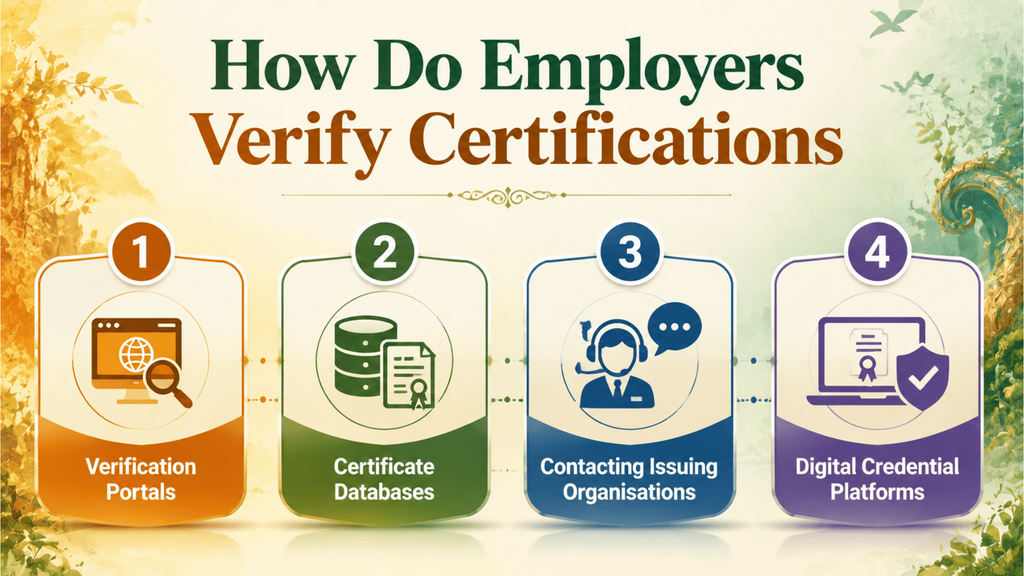
How Do Employers Verify Certifications: 4 Common Methods Explained
When considering how do employers check certifications?, organisations typically use several verification methods:
1. Verification portals
Many organisations provide online verification portals where employers can enter certificate details and instantly confirm credential status.
2. Certificate databases
Digital certificate databases allow employers to compare certificate information against official records stored by the issuing organisation. This helps confirm details such as certificate holders, qualifications, and issue dates.
3. Contacting issuing organisations
For some credentials, employers may directly contact universities, training providers, or certification bodies to confirm whether a certificate was issued.
4. Digital credential platforms
For organisations managing certificates through WordPress websites, a dedicated certificate verification plugin can help create a simpler verification workflow. These systems make the process faster while improving trust between employers, learners, and certificate providers.
How QR Code Certificate Verification Improves Security
QR code certificate verification provides a faster and more secure way to confirm the validity of digital and printed certificates. Instead of relying only on the appearance of a certificate document, QR codes connect credentials directly to official verification records, allowing users to check whether the information is genuine.
As organisations increasingly use digital credentials, QR code verification helps improve certificate authentication by creating a direct connection between a certificate and the records maintained by the issuing organisation.
Instant Certificate Checking
One of the main benefits of QR code certificate verification is faster access to certificate information. Users can simply scan the QR code using a smartphone or device and instantly access the official verification page.
This allows employers, institutions, and other authorised users to quickly confirm certificate details without waiting for manual checks or contacting the issuing organisation.
Connecting Certificates to Official Records
A QR code does not prove authenticity by itself. Its security value comes from linking the certificate to official records stored by the certificate issuing organisation.
When scanned, the QR code can direct users to a secure verification system where details such as the certificate holder, qualification, issue date, and credential status can be checked against trusted records. This strengthens certificate authentication by ensuring that verification is based on original data rather than the document appearance alone.
Reducing Manual Verification Work
Traditional certificate checks often require organisations to manually review documents, contact providers, or search through records. QR code systems simplify this process by allowing verification details to be accessed automatically.
For employers and training providers managing large numbers of certificates, this reduces administrative workload, improves response times, and creates a more efficient verification process.
Helping Prevent Certificate Manipulation
Certificate manipulation can involve changing names, dates, qualifications, or other details on genuine documents. QR code certificate verification helps reduce this risk by connecting credentials to secure digital records that cannot be easily altered through document editing.
When certificate information does not match the official record, the verification system can highlight potential issues and help identify suspicious credentials.
Free Certificate Verification Tool vs Manual Certificate Checking
Organisations can verify credentials using traditional manual methods or modern digital solutions. While manual certificate checking has been used for many years, a free online certificate verification tool provides a faster and more efficient way to confirm certificate authenticity.
A certificate checking system allows organisations to compare certificate details against official records without relying on lengthy communication processes. A dedicated certificate verification platform helps reduce administrative work, improve accuracy, and make credential checks easier for employers, training providers, and educational organisations.
| Manual Certificate Checking | Certificate Verification Tool |
| Requires contacting the issuing organisation | Provides instant online verification |
| Takes more time to complete checks | Enables faster certificate checking |
| Difficult to manage large numbers of certificates | Easily scales for high-volume verification |
| Relies heavily on document review | Uses official records for authenticity checks |
| Higher risk of missing fraudulent documents | Helps identify suspicious or invalid certificates |
A free online certificate verification tool gives organisations a practical way to improve their verification process by reducing delays and creating a more reliable method for checking credentials. While manual checking may still be useful in some situations, digital verification provides greater efficiency, accuracy, and accessibility.
Who Can Use Certificate Verification Tools: 4 Key Users
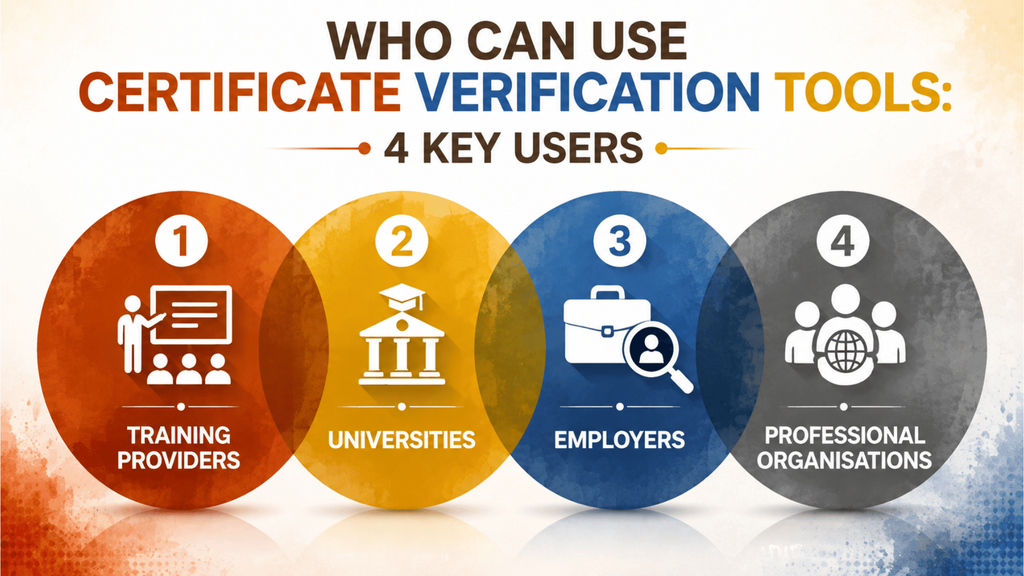
A certificate verification platform can support any organisation that issues, manages, or needs to confirm credentials. From education providers to employers, these systems help improve trust, reduce administrative work, and create a reliable way to check whether certificates are genuine.
Using certificate management software and a secure certificate verification system, organisations can store credential records, manage issued certificates, and allow authorised users to verify achievements quickly.
1. Training Providers
Training providers use certificate verification tools to issue, manage, and verify learner certificates. A digital system allows providers to maintain accurate records of completed courses, qualifications, and learner achievements.
Training providers using WordPress can install Edutain Certificate Validator to add certificate verification functionality to their learning websites.
2. Universities
Universities rely on trusted systems to maintain academic records and verify educational achievements. A secure certificate verification system helps institutions protect degree certificates, course completions, and other academic credentials.
Digital certificate management allows universities to provide faster verification services while maintaining confidence in their official records.
3. Employers
Employers use certificate verification tools to confirm candidate qualifications, training history, and professional development achievements during recruitment or compliance checks.
A reliable certificate management software solution helps employers verify credentials efficiently, reduce the risk of fraudulent claims, and make better-informed hiring decisions.
4. Professional Organisations
Professional organisations and certification bodies use verification systems to manage certified members and maintain accurate credential records. These platforms help organisations track certifications, confirm member achievements, and support ongoing professional standards.
Want to see how certificate verification works in practice? Discover how Sarah made hundreds of old certificates verifiable using Edutain Certificate Validator with a single CSV file, without needing an LMS.
How Can You Tell If a Certificate Is Real or Fake?
A free certificate verification tool can help determine whether a certificate is genuine by checking its unique certificate ID against the issuing organisation’s records. A successful verification should confirm that the certificate details match an authentic record.
However, verifying a certificate involves more than checking its ID. Learn how to check if a certificate is original or fake online, including warning signs, authenticity checks and verification methods.
Free Certificate Verification Tool for WordPress Websites
WordPress course providers, training organisations, and online educators issue thousands of certificates every year. However, simply creating a certificate is not enough to build trust. Learners, employers, and other organisations need a reliable way to confirm that certificates are genuine and issued by the correct provider.
A certificate verification platform helps WordPress-based education websites create a trusted connection between issued certificates and official records. Instead of relying on downloadable PDFs or manual confirmation requests, providers can offer learners an easy way to verify their achievements online.
A reliable certificate verification software solution allows course providers to create verification pages where users can check certificate details instantly. This improves transparency, reduces administrative workload, and helps protect the reputation of the organisation issuing the credentials.
Adding Certificate Verification Pages
WordPress course providers can improve learner confidence by adding dedicated certificate verification pages to their websites. These pages allow users to enter certificate details or access verification links to confirm whether a credential is valid.
A verification page creates a direct connection between the certificate holder, the issuing organisation, and the official certificate record. This makes it easier for employers and other third parties to confirm learner achievements without contacting the provider manually.
Managing Certificate Records
Effective certificate management software helps organisations store, organise, and manage certificate information in one central system. Course providers can maintain accurate records of issued certificates, track learner achievements, and respond to verification requests more efficiently.
Instead of searching through spreadsheets or individual files, organisations can access structured digital records whenever certificate validation is required. This improves accuracy and helps maintain a reliable history of issued credentials.
QR Code Certificate Verification
A QR code certificate verification system provides a simple way for learners and employers to access certificate information. By scanning a QR code placed on a certificate, users can be directed to a verification page connected to the official certificate record.
This reduces manual checking and provides a faster way to confirm certificate details. When combined with secure records, QR code verification helps prevent unauthorised changes and supports stronger certificate authenticity checks.
Digital Certificate Management
Modern education providers need efficient ways to manage digital credentials throughout their lifecycle. Digital certificate management allows organisations to issue, store, verify, and maintain certificates using secure online systems.
For WordPress websites, integrating a dedicated verification solution helps transform certificates from simple documents into trusted digital credentials that can be verified anytime.
Edutain Certificate Validator
Edutain Certificate Validator is a practical certificate verification platform built for WordPress websites that want to add online certificate verification features. It helps course providers manage certificate records, create verification pages, and allow users to confirm certificate authenticity directly from their website.
With features such as digital certificate management and QR code-based verification, Edutain Certificate Validator helps training providers protect their credentials, reduce certificate fraud risks, and build greater trust with learners and employers.
Frequently Asked Questions (FAQs)
How to verify if a certificate is valid?
To verify if a certificate is valid, check it through the official verification system provided by the issuing organisation. Enter the certificate number, holder details, or scan the QR code if available. The system should compare the information with official certificate records to confirm its validity.
How do I verify a certificate online?
You can verify a certificate online by visiting the certificate issuer’s official verification page. Enter the required details, such as the certificate ID or learner information, and compare the results with the original certificate details stored by the organisation.
How can I check if a certificate is genuine?
To check if a certificate is genuine, verify it using the official records of the issuing organisation. Confirm details such as the certificate holder’s name, qualification, issue date, certificate number, and issuing body. A genuine certificate should match the information stored by the provider.
How do employers verify certifications?
Employers verify certifications by checking certificate numbers, contacting issuing organisations, using verification portals, or accessing digital credential platforms. These methods help employers confirm that candidates have completed the claimed qualifications, training programmes, or professional certifications.
How do employers check certifications?
Employers typically check certifications by reviewing official verification records, using online certificate checking systems, or requesting confirmation from universities, training providers, or certification bodies. Digital verification tools make this process faster and more reliable.
What is the best online certificate checker?
The best online certificate checker should connect directly with official certificate records, provide accurate verification results, support secure access, and make it easy to confirm certificate authenticity. A reliable system should help prevent fake certificates and simplify credential checks.
How can I validate a certificate?
You can validate a certificate by checking its details against the official database of the organisation that issued it. Certificate validation usually involves confirming the certificate ID, holder information, qualification details, and status through a trusted verification system.
How to check if a certificate is real or fake?
To check whether a certificate is real or fake, verify it through the issuing organisation’s official verification system. Look for matching certificate records, valid identification numbers, and confirmation from the provider. Unverified documents, missing records, or altered details may indicate a fake certificate.
How to check fake certificate online?
To check a fake certificate online, use the official verification page of the certificate issuer. Enter the certificate details or scan the QR code to see whether the information matches the organisation’s records. Avoid relying only on the appearance of a certificate, as fake documents can look genuine.
How can a digital certificate be verified?
A digital certificate can be verified through online verification platforms, certificate databases, QR code systems, or digital credential platforms. The verification process checks whether the certificate information matches the original records created by the issuing organisation.
What is an invalid certificate?
An invalid certificate is a credential that cannot be confirmed through official verification records. This may happen if the certificate does not exist, the details do not match, the document has been altered, or the issuing organisation cannot confirm its authenticity.
How to verify original documents?
To verify original documents, check them through the organisation that issued them. For educational and professional certificates, use official verification systems to compare document details with stored records and confirm that the information is accurate.
How to verify someone’s certification?
To verify someone’s certification, use the certificate issuer’s official verification system or contact the organisation responsible for issuing the credential. Employers and institutions can confirm certificate details by checking records linked to the individual’s qualification or training.
What is a verification certificate?
A verification certificate is a document or digital record that confirms the authenticity and validity of a credential. It provides evidence that a certificate has been checked against official records and recognised by the issuing organisation.
How do I check my certifications online?
You can check your certifications online by visiting the verification portal provided by the issuing organisation. Enter your certificate details or use a verification link or QR code to access your digital credential record.
How to identify fake certificates?
Fake certificates can often be identified by checking for missing certificate numbers, incorrect details, poor-quality documents, unusual formatting, or a lack of official verification records. The most reliable method is confirming the certificate through the issuing organisation’s verification system.
What should a certificate of authenticity look like?
A certificate of authenticity should include clear details about the issuing organisation, certificate holder, unique identification information, issue date, and verification details. However, appearance alone does not prove authenticity; the certificate should always be verified against official records.
Conclusion
Certificates represent trust, achievement, and proof of learning, but their value depends on whether they can be verified. As digital credentials become more common, organisations need reliable ways to confirm certificate authenticity and protect against fake or altered documents.
A free certificate verification tool provides a simple and accessible way for learners, employers, and organisations to check certificate details against trusted records. By using secure verification methods, organisations can reduce fraud risks, improve transparency, and make credential checking faster.
A reliable certificate verification platform helps transform certificates from simple documents into trusted digital credentials. Whether used by training providers, universities, or employers, verification technology supports better decision-making and ensures that genuine achievements receive the recognition they deserve.

Avik Sharafat Al Rahman is a blogger who writes about technology. He shares information about new technologies, digital trends, and useful tech tips. He enjoys helping people learn more about the world of technology through his blogs.